
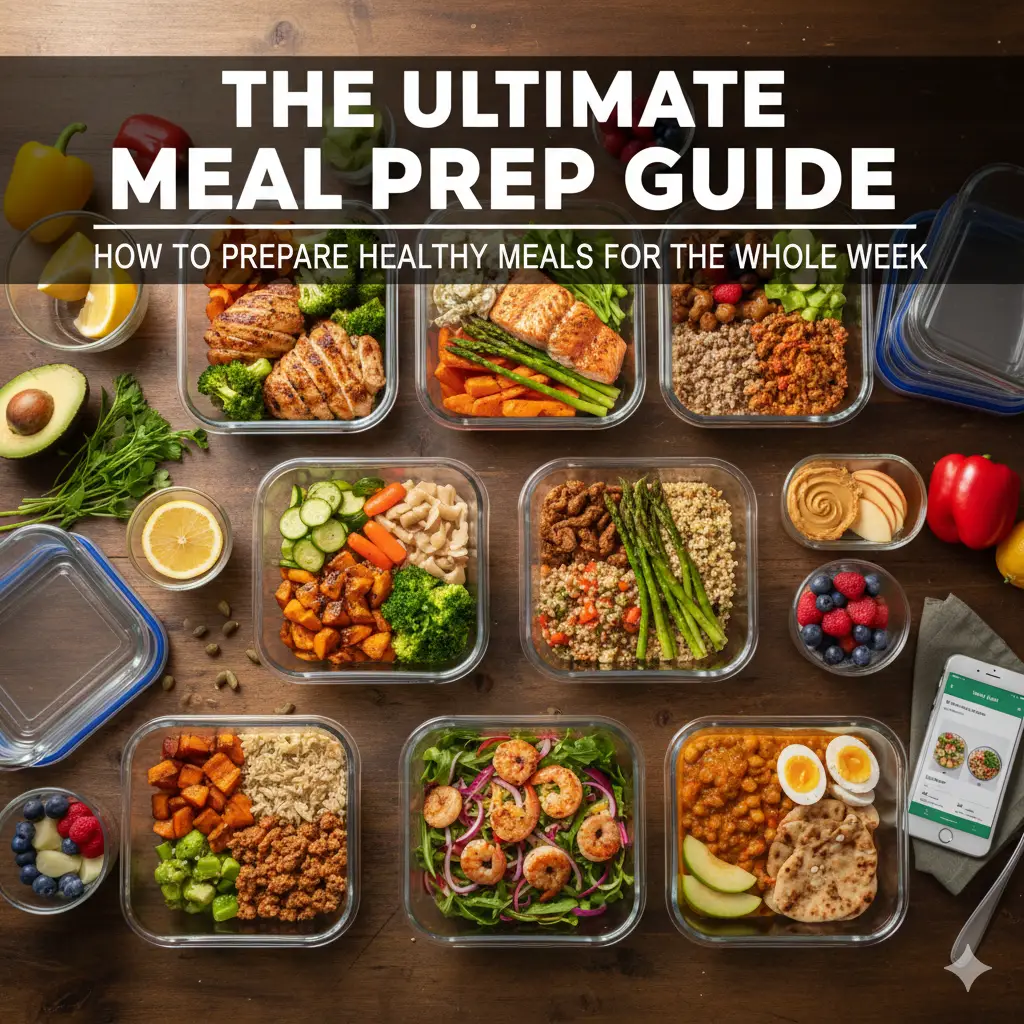
Eating healthy is much easier when your fridge is already stocked with ready-to-eat meals. That’s exactly what meal prep is about: you cook once, and you eat well all week. Instead of grabbing fast food or snacks when you’re tired, you simply open your fridge and choose a balanced meal that you’ve already prepared. In this guide, you’ll learn step by step how to start meal prepping, even if you’re a complete beginner.
Meal prep is not about strict dieting or complicated recipes. It’s about making your life easier, saving time and money, and supporting your health goals with simple, tasty food.What Is Meal Prep and Why Does It Matter?
Meal prep means planning and preparing your meals in advance, usually for several days. You cook in larger batches, store the food properly, and reheat it when needed. This method is popular among busy workers, students, parents, and anyone who wants to eat better without spending hours in the kitchen every day.Benefits of Meal Prep
- Save time: Cook once or twice a week instead of every day.
- Save money: Fewer last-minute takeaways and impulse buys.
- Eat healthier: You control ingredients, portions, and cooking methods.
- Less stress: No more “What am I going to eat tonight?” every evening.
- Support your goals: Whether you want to lose weight, gain muscle, or just feel better, meal prep helps you stay consistent.
Step 1: Define Your Goal for the Week
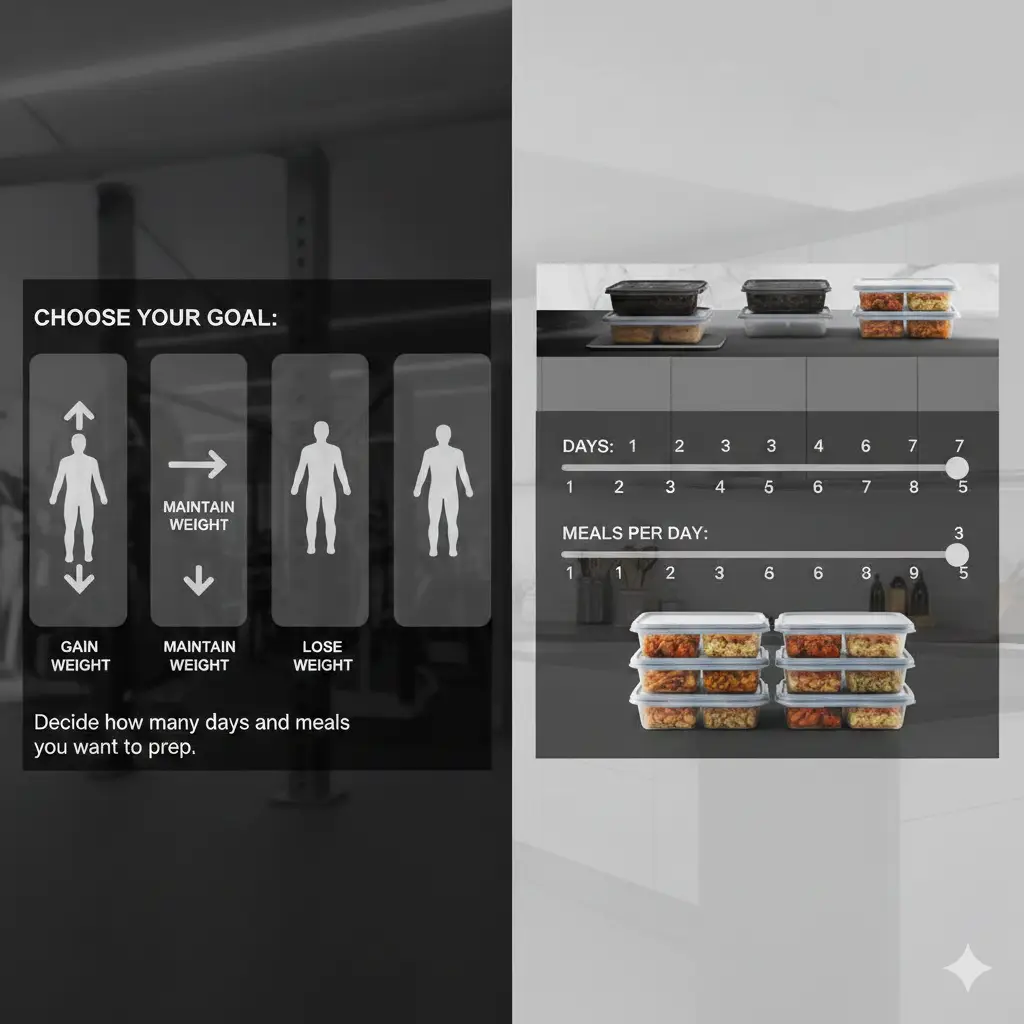
Before you start cooking, get clear on what you want from your meals this week. This will influence your portions, recipes, and ingredients.Questions to Ask Yourself
- Do I want to lose weight, maintain, or gain?
- How many meals do I usually eat per day? (e.g. 3 meals + 1 snack)
- Do I have any dietary preferences? (vegetarian, high protein, low carb, dairy-free, etc.)
- How many days do I want to prep for? (3 days, 5 days, or the full week)
For beginners, starting with 3–4 days of meals is more realistic than prepping a full 7 days at once.
Step 2: Plan Simple, Balanced Meals
To keep meal prep sustainable, choose recipes that are:
- Simple
- Repeatable
- Made with ingredients that store well
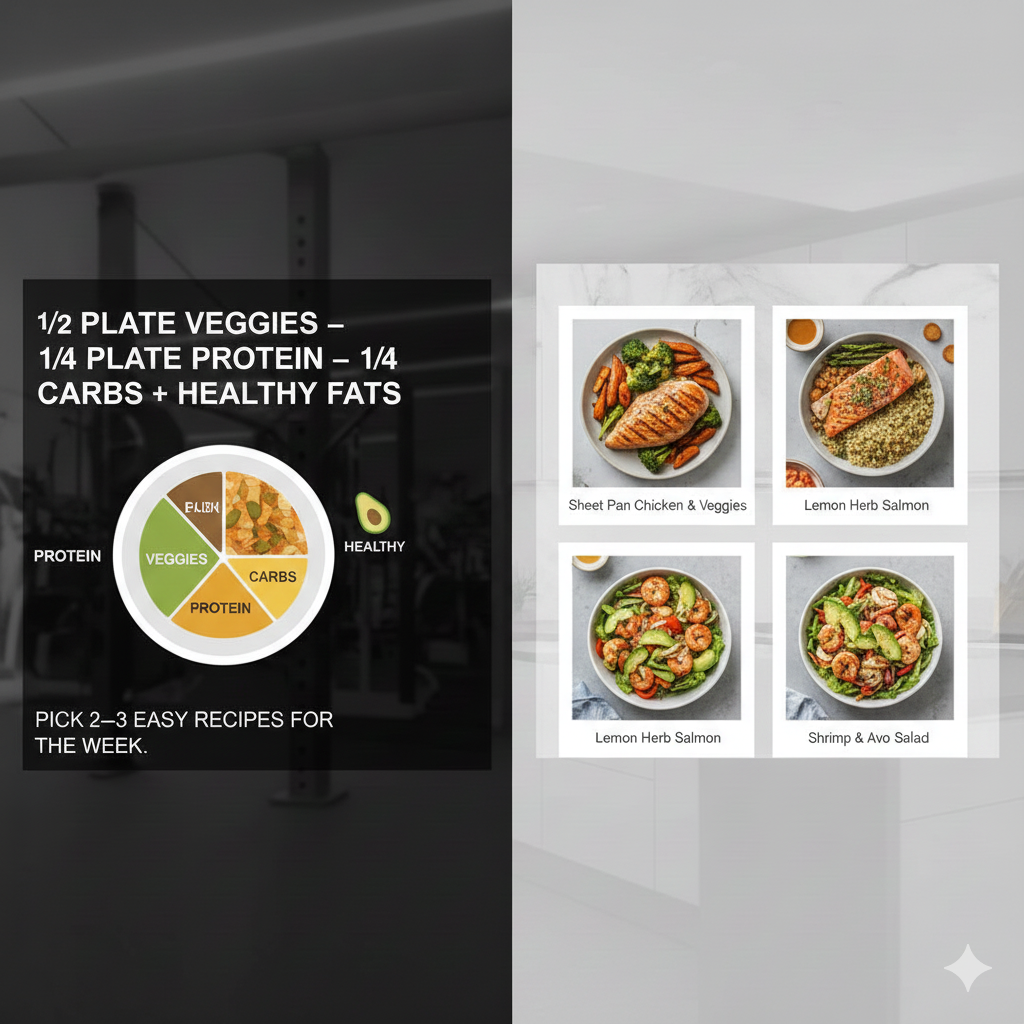
The Balanced Plate Formula
A healthy meal can be built using this easy formula:
- ½ plate vegetables (broccoli, carrots, salad, peppers, green beans…)
- ¼ plate protein (chicken, turkey, eggs, tofu, lentils, fish…)
- ¼ plate complex carbs (brown rice, quinoa, whole wheat pasta, sweet potato…)
- healthy fats in small amounts (olive oil, avocado, nuts, seeds)
This balance helps keep you full, energized, and satisfied.Example Weekly Meal Outline
Here’s a simple example for lunch and dinner for 3–4 days:
- Protein: Chicken breast, chickpeas, eggs
- Carbs: Brown rice, quinoa, sweet potatoes
- Veggies: Broccoli, carrots, bell peppers, spinach, mixed salad
- Extras: Olive oil, spices, lemon, garlic, hummus
You don’t need 10 different recipes. 2–3 base meals with small variations are enough to start.
Step 3: Create a Shopping List
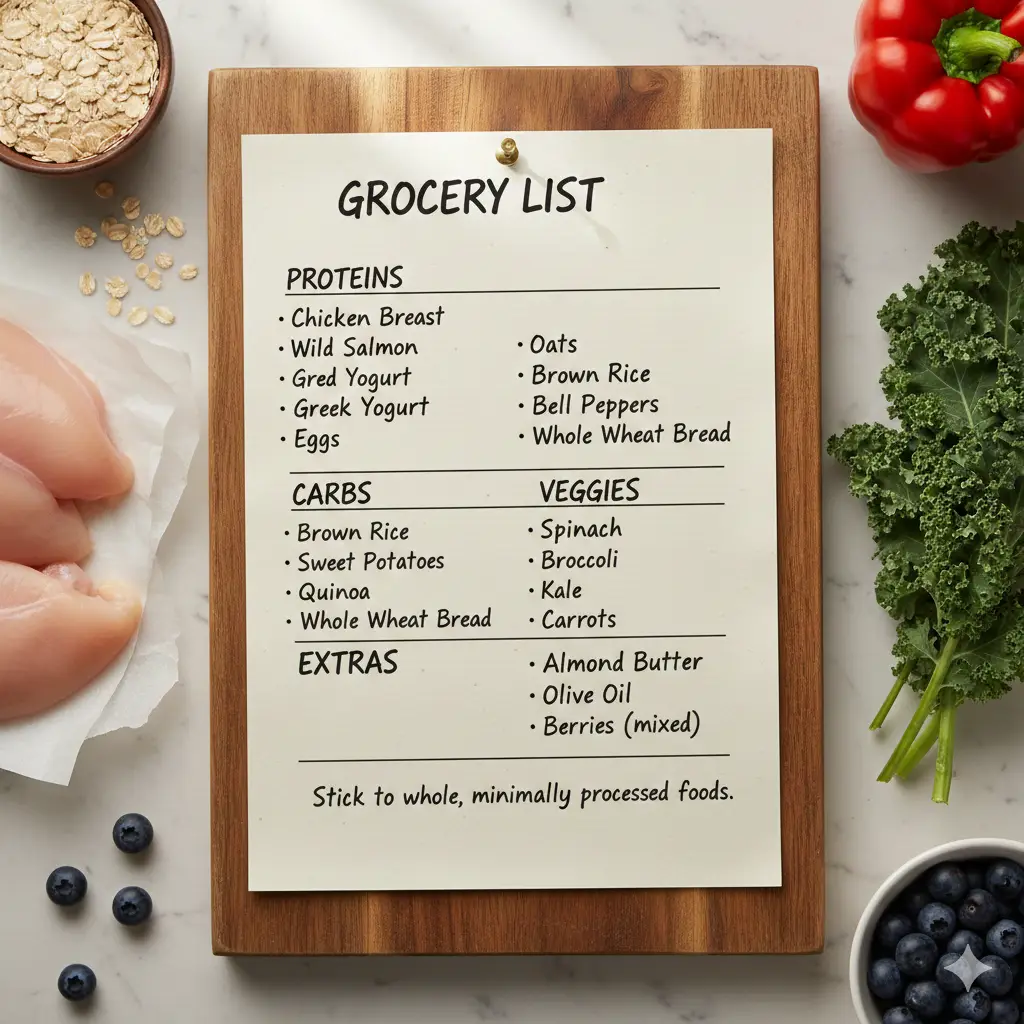
Once you know what you want to cook, turn it into a shopping list. Group items by category to save time at the store.Sample Shopping List (for 3–4 Days, Lunch + Dinner)
Proteins:
- 1–1.5 kg (2–3 lb) chicken breast or thighs
- 1–2 cans of chickpeas or lentils
- 10–12 eggs
Carbohydrates:
- 500 g brown rice or quinoa
- 2–3 medium sweet potatoes
Vegetables:
- 1 head of broccoli
- 4–5 carrots
- 2–3 bell peppers
- 1 bag of spinach or mixed greens
- 1 cucumber or cherry tomatoes (for fresh salads)
Healthy fats & extras:
- Olive oil
- Garlic, onions
- Lemon
- Salt, pepper, paprika, curry, herbs
- Optional: hummus, plain yogurt, seeds, nuts
Step 4: Choose a Meal Prep Day and Time
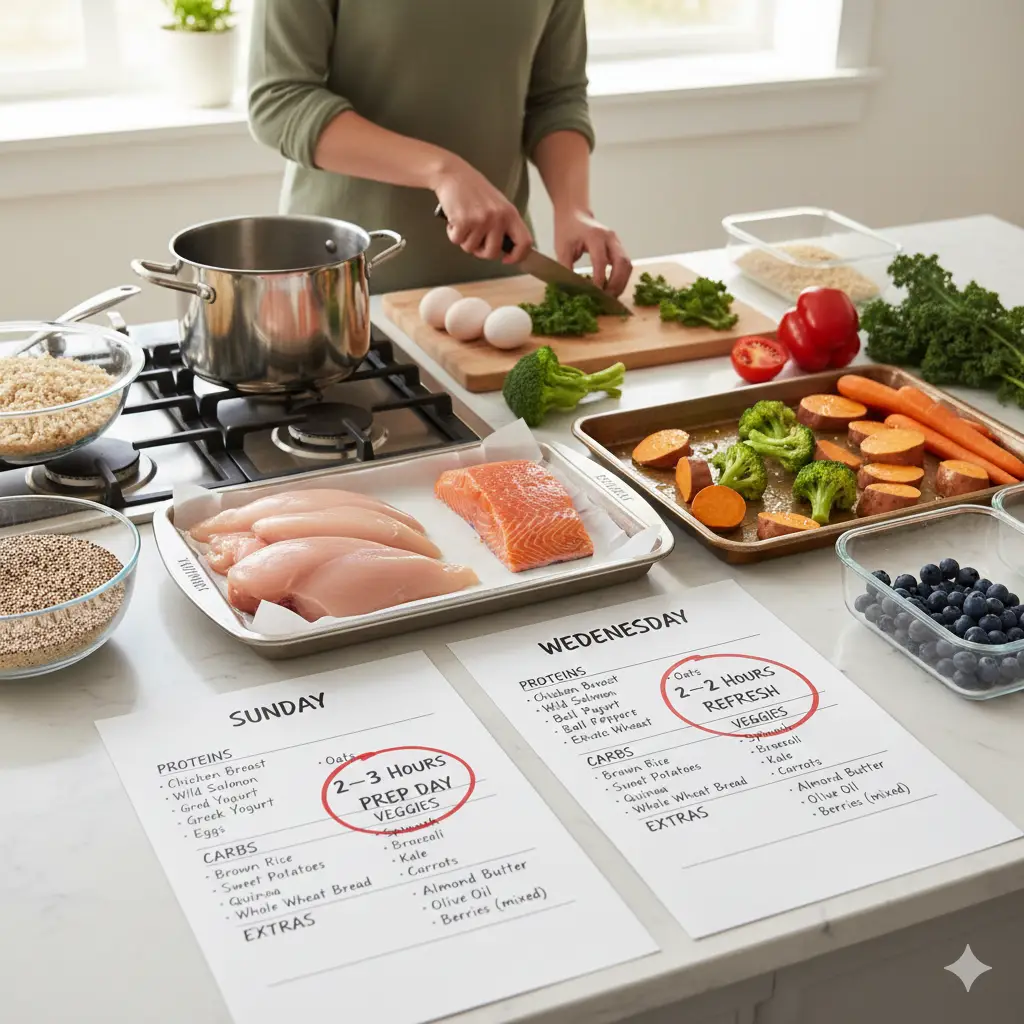
Pick 1–2 specific time slots in your week for meal prep, for example:
- Sunday afternoon
- Wednesday evening
Treat these as appointments with yourself. Put on some music or a podcast and make it a routine. Meal prep doesn’t have to be boring or stressful.
For beginners, allow 2–3 hours for your first full meal prep session. You will become faster with practice.
Step 5: Cook Smart with Batch Cooking
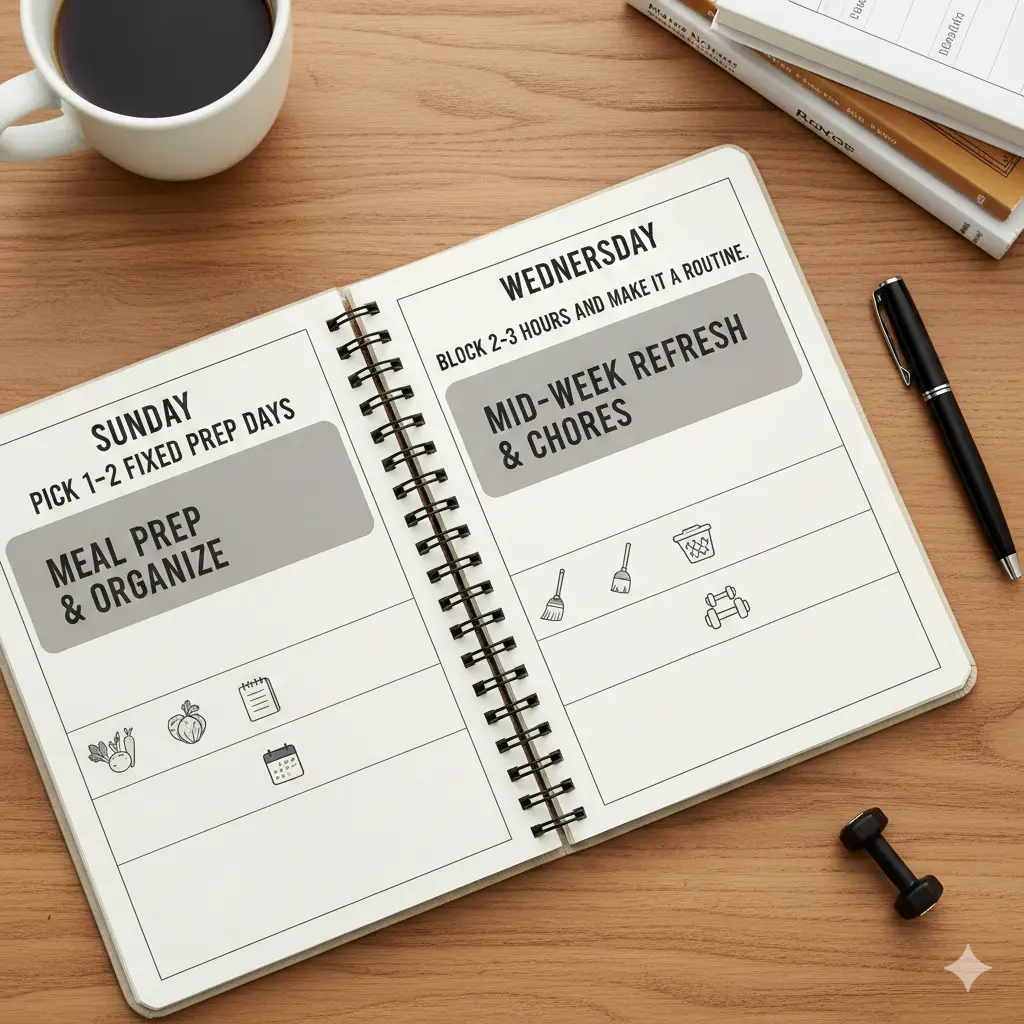
To save time, cook several components at once. Use your stove, oven, and possibly an air fryer or rice cooker together.Example Meal Prep Cooking Session
- Start with carbs
- Cook a big batch of brown rice or quinoa according to the package instructions.
- Bake or boil sweet potatoes (they can cook while you prepare other things).
- Cook your protein
- Season chicken with olive oil, salt, pepper, garlic, and your favorite spices (paprika, curry, herbs).
- Bake in the oven or pan-cook in large batches.
- Hard-boil a few eggs as an extra protein source or snack.
- Prepare vegetables
- Roast vegetables (e.g. broccoli, carrots, peppers) on a baking tray with a bit of olive oil, salt, and pepper.
- Wash and chop raw veggies for salads (cucumbers, tomatoes, lettuce).
- Cool and portion
- Let food cool slightly (not more than 1–2 hours) before storing in containers.
- Combine components into ready-to-eat meals.
Step 6: Portion and Store Your Meals Safely
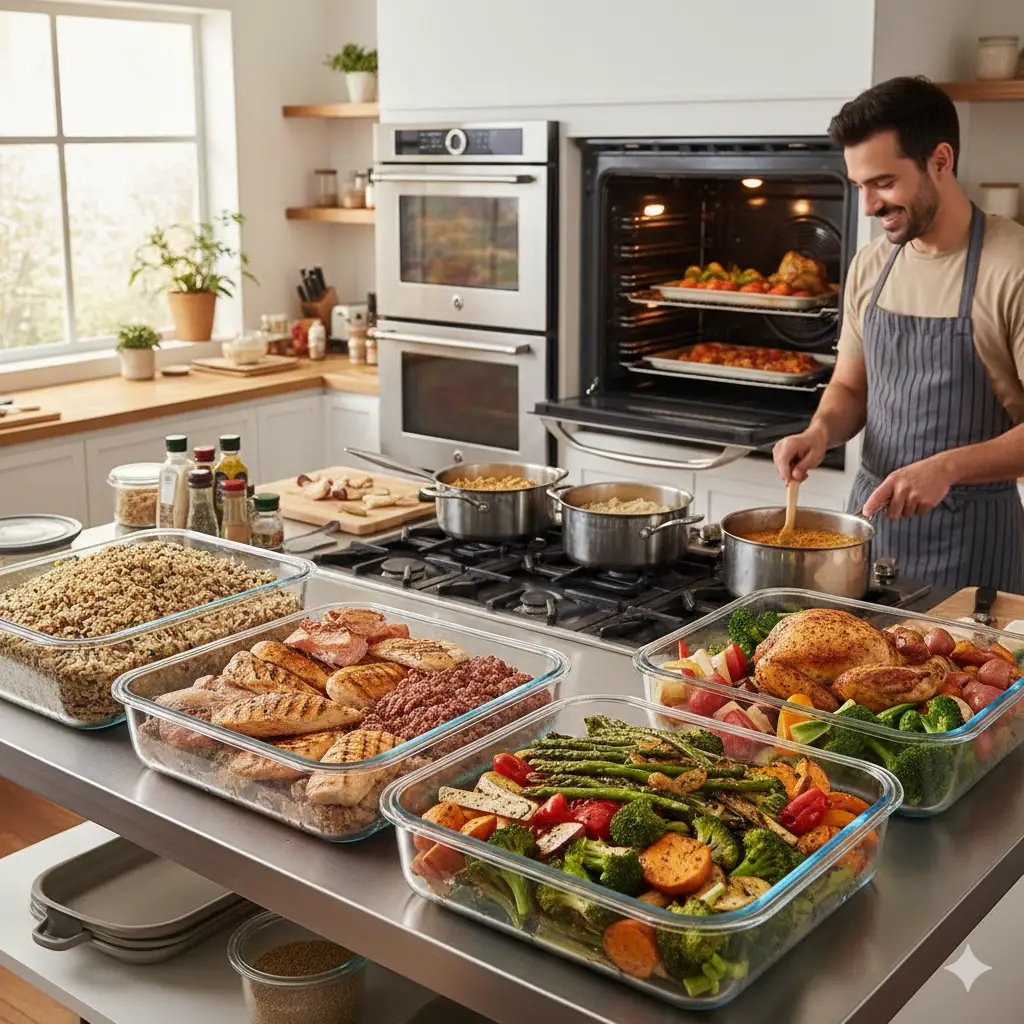
Good storage is essential for both food safety and freshness.Choosing the Right Containers
- Use BPA-free plastic or glass containers with tight lids.
- Choose container sizes for single portions to make grab-and-go easier.
- You can also use larger containers to store each component (all rice together, all chicken together) and assemble meals each day.
How Long Does Meal Prep Last?
General guidelines (in the fridge, at or below 4°C / 40°F):
- Cooked meat: 3–4 days
- Cooked rice/pasta: 3–4 days
- Cooked vegetables: 3–4 days
- Hard-boiled eggs: 1 week (unpeeled)
For longer storage, freeze extra portions. Many meals freeze well, especially rice bowls, stews, and soups.
Label containers with the date and, if needed, the meal name.
Step 7: Reheating and Eating
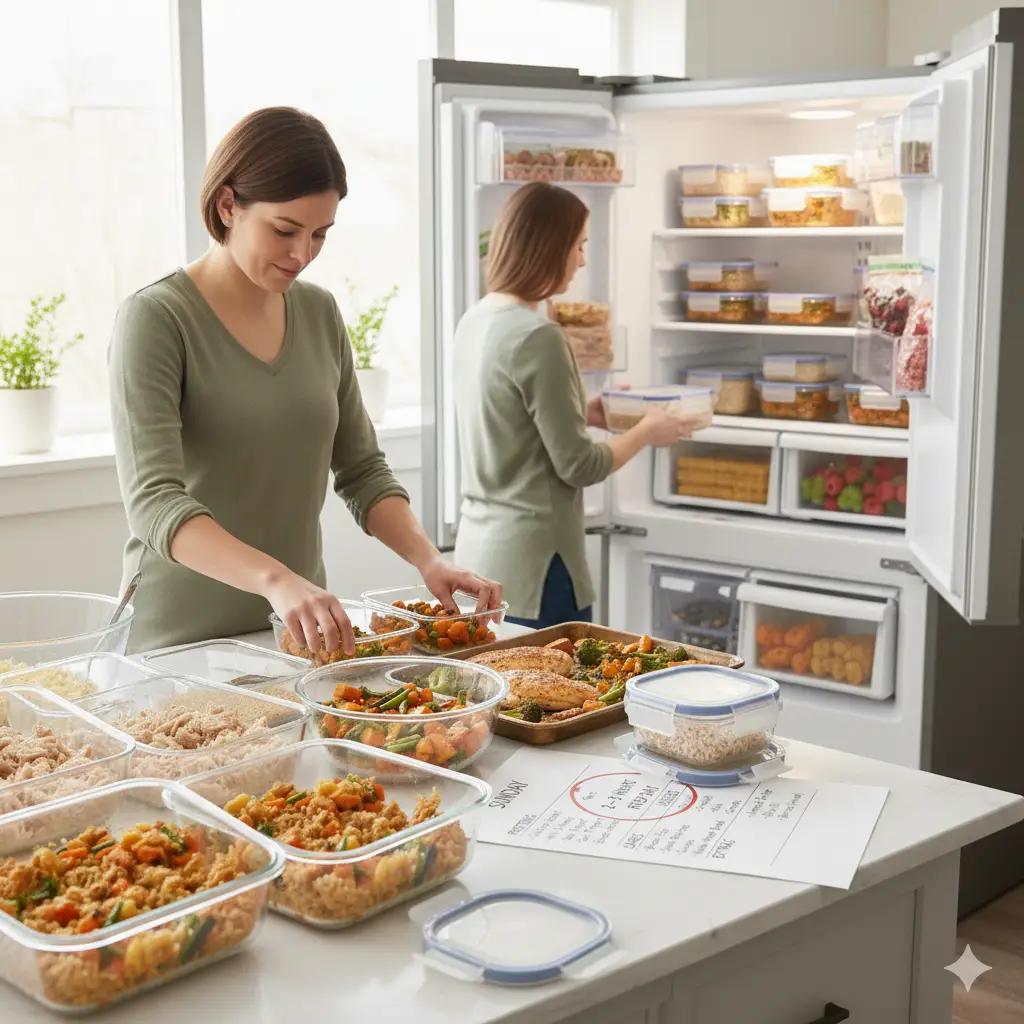
When it’s time to eat:Reheating Options
- Microwave: Reheat in 1–2 minute intervals, stirring if needed, until hot throughout.
- Stovetop: Reheat in a pan with a splash of water or broth.
- Cold options: Some meals can be eaten cold (salads, grain bowls, overnight oats).
Always make sure your food is steaming hot when reheated, especially rice and meat.Sample 3-Day Meal Prep Menu
Here is a concrete example you can use or adapt:Lunch (3 Days): Chicken, Rice, and Veggie Bowls
- 120–150 g chicken breast per portion
- ½–1 cup cooked brown rice
- Roasted broccoli and carrots
- 1 tsp olive oil or a light sauce (yogurt + lemon + garlic)
Dinner (3 Days): Chickpea and Sweet Potato Bowls
- 1 cup roasted chickpeas (with paprika and cumin)
- ½–1 medium roasted sweet potato
- Mixed salad (spinach, cucumber, tomato)
- 1 tbsp hummus or light dressing
You can easily adjust portions if you need more or fewer calories.Common Mistakes to Avoid When Meal Prepping
To keep your meal prep effective and safe, avoid these frequent mistakes:1. Cooking Too Many Complicated Recipes
Start with 1–2 simple base recipes and build from there.2. Not Seasoning Enough
Healthy food doesn’t mean bland food. Use herbs, spices, garlic, lemon, and pepper.3. Ignoring Food Safety
Don’t leave cooked food at room temperature for more than 2 hours. Store it in the fridge as soon as it cools a bit.4. Prepping Food You Don’t Actually Like
Meal prep should be enjoyable. Choose ingredients and recipes you genuinely want to eat.5. Being Too Strict
It’s okay to change a meal, eat out sometimes, or adjust your plan. Meal prep is there to help you, not to limit you.Final Tips to Make Meal Prep Sustainable
- Start small: prep just lunches for 3 days, then expand.
- Repeat your favorite meals instead of trying something new every time.
- Keep a list of “go-to” recipes that are easy, tasty, and store well.
- Review your week: What worked? What didn’t? Adjust for the next prep.
Meal prep is one of the most powerful habits for a healthier lifestyle. With a bit of planning and a few hours per week, you can transform the way you eat and feel.