
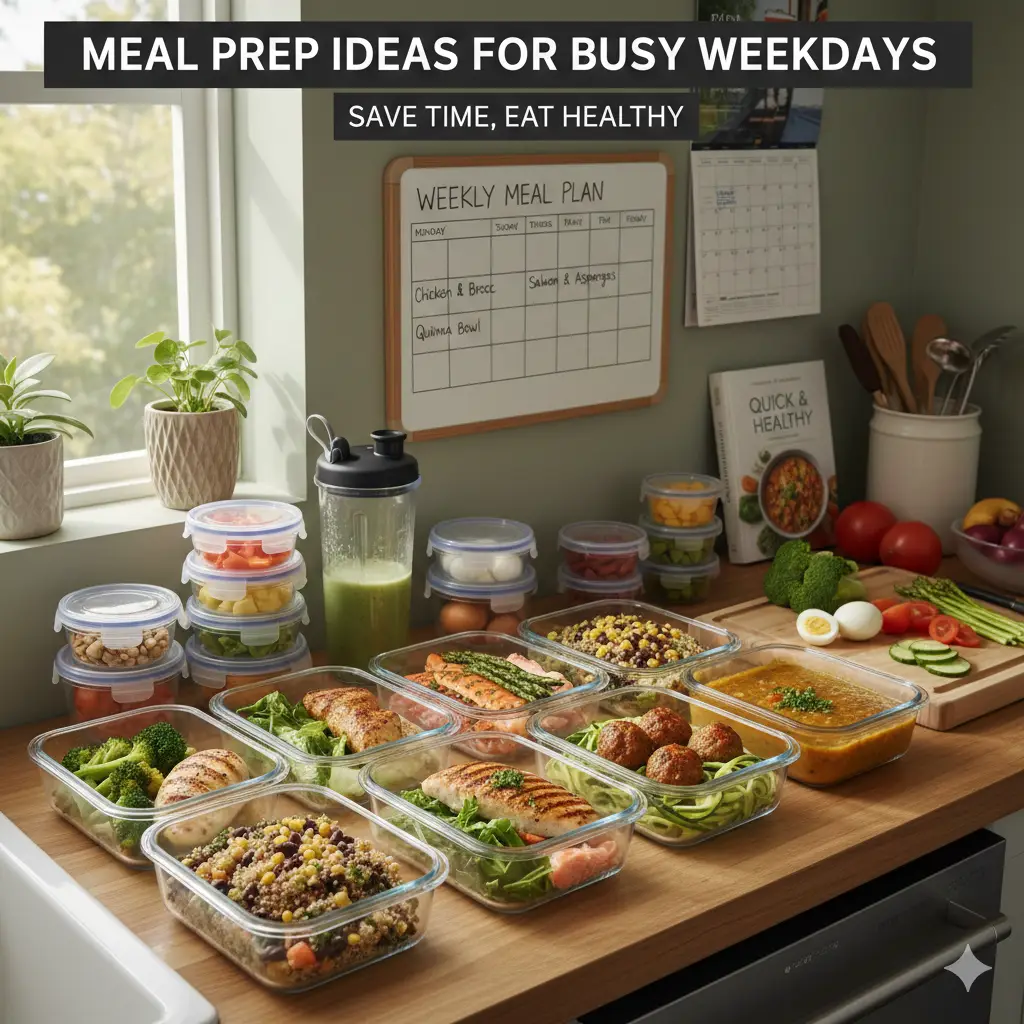
Busy schedule? No problem. Meal prep is one of the smartest ways to stay consistent with healthy eating while saving time and money. With the right planning, you can prepare several nutritious meals in advance and avoid unhealthy last-minute food choices.
In this guide, you’ll discover simple meal prep ideas for busy weekdays, practical tips, and a complete weekly structure you can follow immediately.
What Is Meal Prep and Why It Works
Meal prep means preparing your meals or ingredients ahead of time—usually once or twice a week—so that healthy food is always ready when you need it.
Key Benefits of Meal Prep
- Saves several hours per week
- Reduces food expenses
- Helps control calories and portions
- Prevents unhealthy snacking
- Improves consistency in healthy eating
Meal prep is especially effective for working professionals, parents, students, and anyone with limited time.
Simple Weekly Meal Prep Structure
You don’t need complicated recipes to succeed with meal prep. Follow this simple 3-step structure.
Step 1 – Choose Your Proteins
Pick 2–3 protein sources per week:
- Chicken breast
- Eggs
- Fish
- Tofu or lentils
- Lean beef or turkey
Step 2 – Add Healthy Carbs
Choose slow-digesting carbohydrates:
- Brown rice
- Quinoa
- Sweet potatoes
- Whole-grain pasta
- Oats
Step 3 – Fill with Vegetables
Add color and fiber:
- Broccoli
- Spinach
- Bell peppers
- Zucchini
- Carrots
5 Easy Meal Prep Ideas for Busy Weekdays
1. Chicken & Rice Bowls
Grilled chicken, brown rice, steamed vegetables, and olive oil make a balanced and filling meal.
2. Overnight Oats for Breakfast
Prepare oats with milk, fruit, and seeds in jars. Store in the fridge for 4–5 days.
3. Salad in a Jar
Layer dressing, protein, vegetables, and greens. Shake before eating.
4. Stir-Fry Boxes
Cook one big pan of vegetables and protein, divide into containers with rice or noodles.
5. Egg Muffins
Bake eggs with vegetables in a muffin tray for quick breakfasts or snacks.
How Long Does Meal Prep Last?
Refrigeration Guide
- Cooked meals: 3–4 days
- Cut vegetables: 4–5 days
- Cooked grains: up to 5 days
Freezer Guide
- Soups & stews: up to 3 months
- Cooked chicken: 2–3 months
- Rice & quinoa: about 2 months
Always use airtight containers and label dates.
Meal Prep for Weight Loss
Meal prep helps weight loss because it:
- Controls portion sizes
- Prevents impulsive eating
- Keeps calories consistent
- Reduces sugar and fast-food intake
A balanced meal-prep plate should contain:
- 40% vegetables
- 30% protein
- 30% complex carbohydrates
Common Meal Prep Mistakes to Avoid
- Preparing too many meals at once
- Using poor-quality containers
- Not varying flavors
- Skipping vegetables
- Not planning snacks
Small variety keeps your routine sustainable.
Final Thoughts
Meal prep is not about perfection—it’s about consistency and simplicity. With just one or two hours of preparation per week, you can completely transform your eating habits, reduce stress, and improve long-term health.
Start small, stay organized, and adjust your meal prep routine to fit your lifestyle.
FAQ – Meal Prep for Busy People
Is meal prep good for beginners?
Yes. Start with 2–3 meals per week and increase gradually.
Can I meal prep without a freezer?
Absolutely. Focus on 3–4 days of refrigerated meals.
Does meal prep save money?
Yes. It reduces food waste and limits eating out.