
✅ Introduction
Fitness tracking apps have become essential tools for people who want to better manage their physical activity and daily nutrition. In 2025, these applications offer a wide range of features including meal planning, calorie tracking, workout logging, and lifestyle monitoring.
Rather than replacing healthy habits, fitness apps are designed to support organization, awareness, and consistency. This guide presents an objective overview of how fitness tracking apps work and what to consider when choosing one for meal and workout planning.
✅ What Are Fitness Tracking Apps?
Fitness tracking apps are mobile applications that help users record physical activity, daily meals, and lifestyle habits. They typically allow users to track:
- Daily steps and workouts
- Calories and macronutrients
- Water intake
- Sleep patterns
- Body measurements
These tools provide feedback and visual progress reports that may help users stay organized and motivated over time.
✅ Why People Use Fitness & Meal Planning Apps
Many individuals use fitness apps to simplify health management and create structure in their routines. These apps may help with:
- Monitoring daily food intake
- Planning balanced meals
- Tracking workout consistency
- Setting realistic fitness goals
- Increasing awareness of lifestyle habits
However, results depend largely on regular use, accurate data input, and personal commitment.
✅ Key Features to Look for in 2025
When choosing a fitness tracking app for meal and workout planning, it is important to focus on functionality, usability, and data accuracy. Useful features include:
- Food database with nutritional values
- Custom meal planning tools
- Workout tracking and exercise libraries
- Progress charts and reports
- Device integration (smartwatches, fitness bands)
- Cloud data backup and privacy controls
Not all apps offer the same level of precision or customization, so selecting one depends on individual needs.
✅ Categories of Fitness Tracking Apps
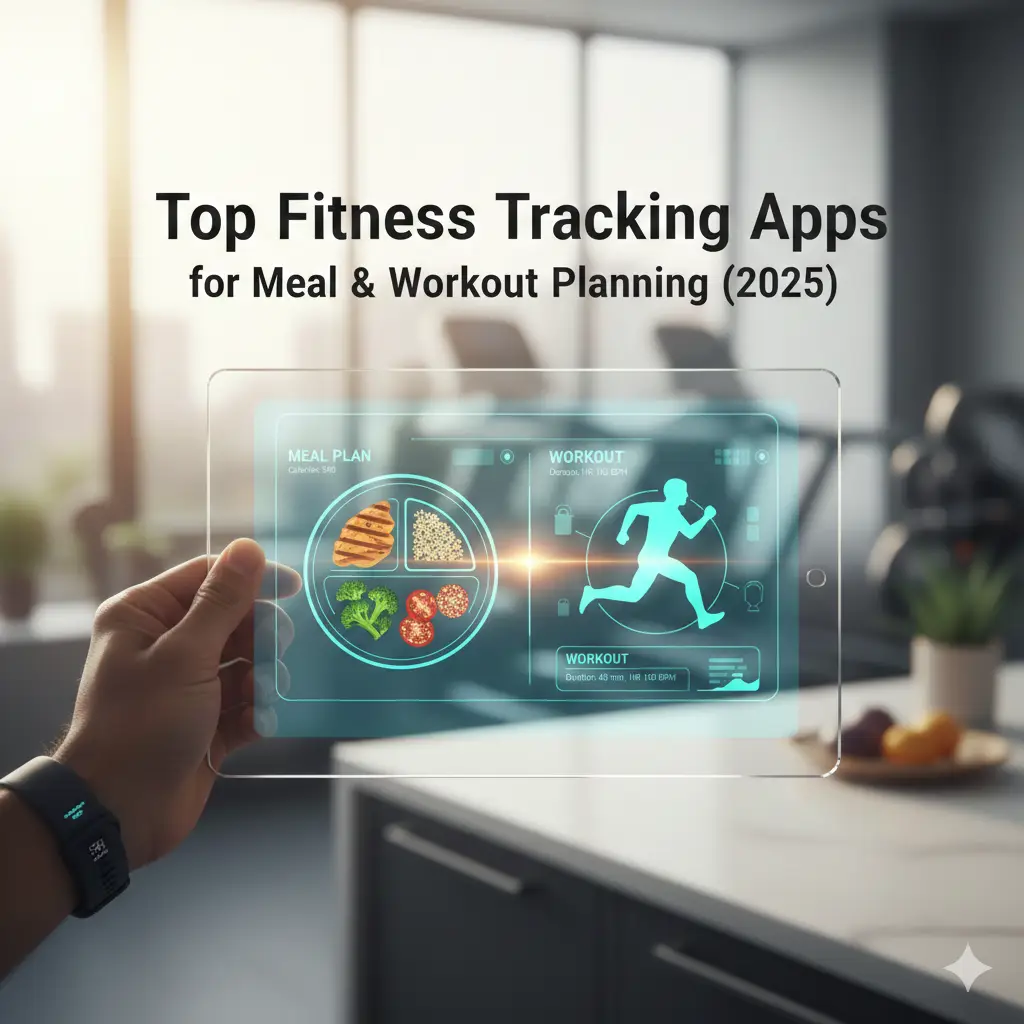
1. Meal & Nutrition Tracking Apps
These apps focus mainly on logging food intake, calories, and macronutrients. They help users better understand eating patterns and portion control.
2. Workout Tracking Apps
Designed for exercise logging, these apps track workouts, repetitions, time, and physical performance.
3. All-in-One Fitness Apps
These combine food tracking, workout planning, progress monitoring, and sometimes mental wellness features in one platform.
✅ Data Accuracy and User Responsibility
While fitness tracking apps provide helpful estimates, they do not always reflect exact nutritional or physiological values. Food databases may vary, and calorie calculations are based on general formulas.
Users should treat the data as guidance rather than medical diagnosis and use the information to support better lifestyle awareness—not to make health decisions without professional advice.
✅ Privacy and Data Protection
Fitness apps often collect personal data such as body measurements, dietary habits, and activity levels. Before using any app, users should:
- Review the privacy policy
- Understand how data is stored and shared
- Check if content is encrypted
- Control permission settings
Data protection plays an essential role in safe app usage.
✅ Benefits of Using Fitness Tracking Apps
When used responsibly, fitness and meal planning apps may help users:
- Develop consistent routines
- Monitor eating and activity habits
- Stay organized with workouts
- Increase long-term motivation
- Better understand personal progress
These benefits depend on consistent use and realistic goal-setting.
✅ Limitations of Fitness Apps
Despite their usefulness, fitness tracking apps have certain limitations:
- Calorie estimates are not exact
- They cannot replace professional coaching
- Over-reliance may increase stress for some users
- Results vary based on individual metabolism and lifestyle
Apps should be used as supportive tools—not as substitutes for professional healthcare advice.
✅ Who Should Use Fitness Tracking Apps?
Fitness tracking apps are suitable for:
- Beginners building basic routines
- Individuals managing daily meals
- People tracking workout consistency
- Anyone who prefers structured digital tracking
They may not be necessary for everyone, especially those who already maintain stable habits without digital tools.
✅ Conclusion
Fitness tracking apps for meal and workout planning in 2025 offer practical tools to support organization, awareness, and consistency in daily routines. While they provide useful guidance, they do not replace a balanced diet, regular physical activity, or professional health advice.
The most effective results come from combining responsible app use with healthy lifestyle habits, realistic goals, and — when needed — expert guidance.
✅ About the Author
FitKitchen Editorial Team
FitKitchen provides educational content related to nutrition, fitness, and healthy living. All information is intended for general knowledge only and does not replace professional medical or fitness advice.